-
Title
-
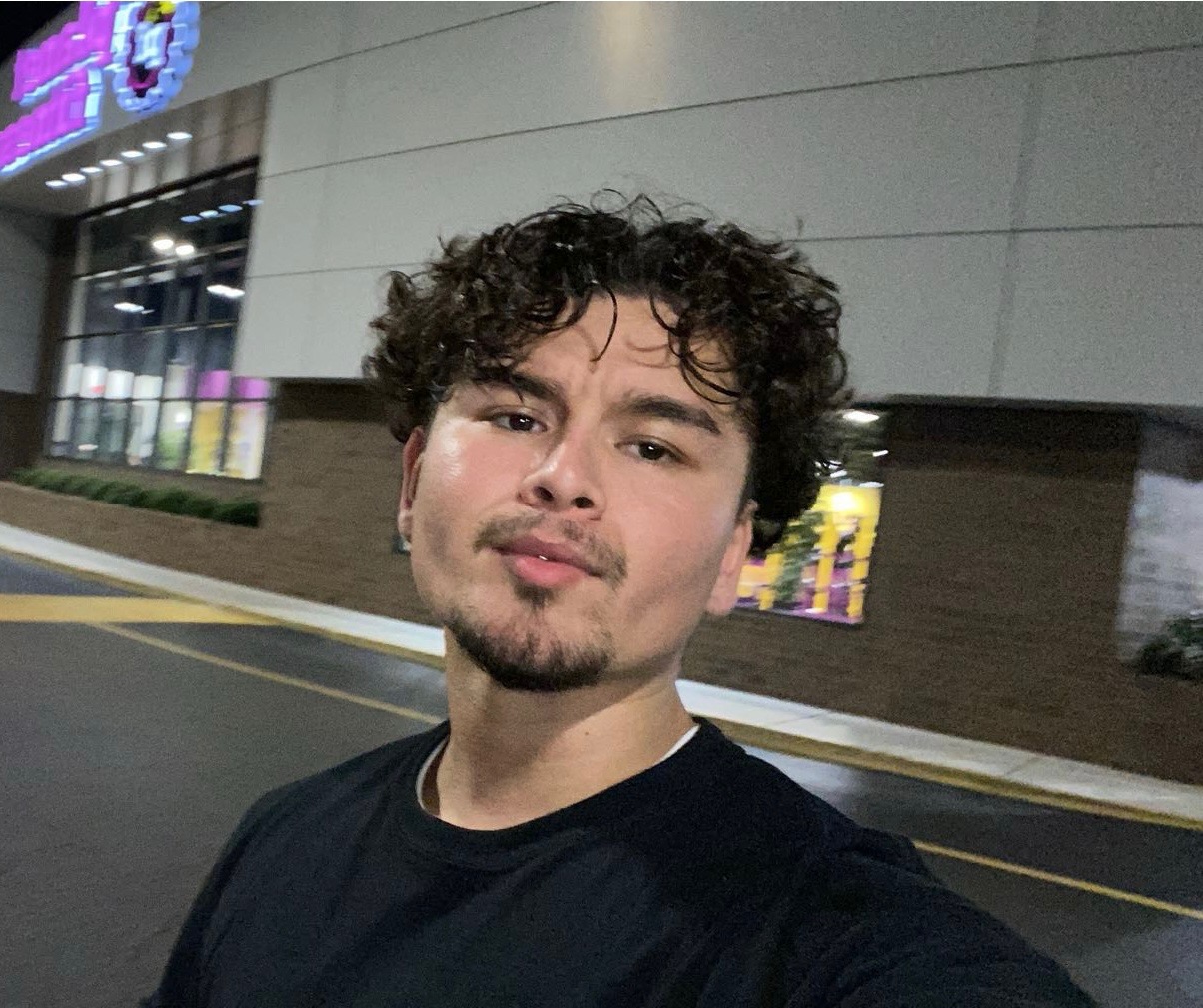
Oral History Interview with Juan Puentes
-
Interviewee
-
Puentes, Juan
-
Interviewer
-
Beaupre, Rhianna
-
Date
-
2025
-
Summary of Interview
-
In this interview Juan Puentes talks about his experience living in California and North Carolina as a Mexican American.
-
Subject
-
Work
-
Identity
-
Family
-
Education
-
Childhood
-
Spatial Coverage
-
Wilmington (N.C.)
-
Huntington Beach (CA)
-
Language
-
English
-
extracted text
-
Title: Oral History Interview with Juan José Puentes
Interviewee: Juan José Puentes (Junior)
Interviewer: Rhianna Beaupre
Date of Interview: 10/15/25
Series: Somos NC
Length: 20:38
Spanish Summary of Interview:
Juan habla sobre la diferencia entre vivir en California y en Carolina del Norte, y sus
experiencias en la escuela y en el trabajo.
English Summary of Interview:
Juan talks about the difference between living in California versus North Carolina, and his
experiences in school and in the workforce.
Start Transcript
Rhianna: Hello, my name is Rhianna Beaupre. I am a senior at UNCW and today I'm with Juan
Jose Puentes who goes by Junior. So, junior, would you like to introduce yourself?
Junior: Hello, my name is Junior Puentes. I am 25 years old.
Rhianna: And you live here in Wilmington, Right?
Junior: And I live here in Wilmington, North Carolina.
Rhianna: Okay. So, junior, where were you born?
Junior: I was born in Santa Ana, California, at Saint Joseph's Hospital on July 1st, 2000.
Rhianna: Alright. And can you tell me a little bit about, like, your family growing up and your
family dynamic and all the relatives you were around and what that looked like in California?
�Junior: Yes. Of course. So growing up in California with my mother and my five other siblings,
I have an older brother named Joseph, younger sister named Jade, a younger sister named Hazel,
and younger brother named Isaiah and another younger brother named Danny.
Rhianna: Alright. And then I know you also grew up around a lot of your aunts and uncles. Can
you tell me a little bit about them?
Junior: Yeah. Of course. So growing up in California, we lived close by near my tías and tíos.
So we would go over and spend some time with them during the weekends or sometimes after
school, during the weekdays, whenever my mom was out working, I would go hang out there, do
homework and spend some quality time with them.
Rhianna: Alight. And can you tell me a little bit about your heritage and your family heritage?
Junior: Yeah. So growing up in California, my tío and tía's are also Mexican American as well.
They would make amazing, delicious dishes like carne asada, caldo de pollo, pozole, and tortas,
etc. So, I was definitely involved with my tíos and my tías and my cousins. Of course, growing
up just with like the food, the music and just the background behind everything was always super
fun. My tío and tías, and cousins, are bilingual, so they speak both English and Spanish. At times
they would do their best to try to teach me how to speak Spanish, although I would do my best
and I was always interested in speaking Spanish myself. I just always had a hard time speaking
the language and learning it.
Rhianna: Alright. And then can you tell me a little bit about the school you went to and. So.
Sorry. How old were you when you moved to North Carolina?
Junior: I was 14 years old when I moved to North Carolina.
Rhianna: So, you went to elementary school and middle school in California?
Junior: Yes, I did.
Rhianna: Can you tell me a little bit about what it was like going to school there and like, what
type of, like, culture that was and the different diversity at the schools?
Junior: Oh, yes. For sure. It was very diverse at the schools growing up, at the elementary
school and middle school. Of course we had Mexican Americans, we had African Americans, we
had Asians. So, our school system was very diverse out in California.
Rhianna: Were there Spanish speakers at your school?
Junior: There were. Yes. We did have some ESL teachers at our elementary and middle schools
growing up in California.
Rhianna: Did you have any friends in school who were Spanish speakers
Junior: Yes, I did have some friends who were bilingual growing up.
�Rhianna: Alright. And then when you came to North Carolina, what was the biggest difference
you would say racially in school? Because you would then were in high school here in North
Carolina.
Junior: Yeah. So it was a big culture shock moving here to Wilmington, North Carolina, of
course, coming from the West Coast to the East Coast, culture is definitely different over here. In
the beginning for me, it didn't feel as diverse as it is now. But growing up in high school, it was
definitely challenging. It was a bit difficult getting used to just being down here in the South, of
course, because it was definitely different than it was for me in California.
Rhianna: Okay. And would you say that when you were in California, you were more connected
to, like, your Mexican American heritage and culture?
Junior: Yes, I'd say more so in California. I was definitely closer with my Mexican American
heritage. Of course, with my tías and my tíos being out there, my abuelita and abuelito growing
up over there, it was definitely a big shock because we moved from California to North Carolina,
and it was just my mother and myself and my five other siblings moving out here.
Rhianna: And when you got to high school here and in school, did you face any, like, racial
prejudice here in North Carolina?
Junior: I definitely did growing up, for sure. I can remember this one time I was trying to figure
out my elective classes. I needed to choose one more, I believe an elective class that my
counselor had recommended me for to do. So, I remember going into the counselor's office
trying to get one of my elective classes, figuring out what I wanted to do. She thought it would
be cool to put me in advanced classes because she asked me, oh, Junior, aren't you Mexican
American? I was like, yes, ma'am, I am. And she would tell me, well, we could put you in these
Spanish classes like honors Spanish. And I told her that I haven't even taken a regular Spanish
class down here. I don't think it would be a good idea to put me in an honors Spanish class,
because I have no experience in speaking the language, of course. So, she just said, I'm sure
you'll get the hang of it, and she put me down in that class automatically. And I didn't want to.
Rhianna: So she put you in an advanced Spanish class without you taking Spanish one and
Spanish two, and you had a hard time understanding in class and stuff?
Junior: Yes, I did, growing up for sure in high school here in Wilmington, North Carolina. I
definitely did struggle in that class, even though I did my very best with anything trying to learn
it.
Rhianna: And did you face any other racial prejudices in high school?
Junior: Yes, I did actually. So I remember growing up, I was very athletic. I was a skateboarder
in high school and what not. Still am. I love to skate here on my free time whenever I do have
the time to. I remember growing up going to high school here, I would be talking to like coaches
or teachers and of course friends growing up in high school that I was interested in playing
�lacrosse or football, and some of them would make comments like, Junior, why would you want
to do those sports? I'm like, because I'm interested in those and they look fun. They say, oh, we
thought you'd be better off at being in cross country or playing soccer because that's what y'all
like to do. So definitely face challenges with that. And it definitely shocked me hearing those
words coming out of like, adult's mouths. Even people I'd call my friends. So definitely very
challenging with that growing up.
Rhianna: So it's been some time since you've been in school and like been in the workforce. So
can you talk about what it is now that you do for a living?
Junior: So now what I do for a living is I work full time at Grainger Industries Supply. It's a
warehouse down here in Wilmington, North Carolina. I do that full time, and I also have a part
time job working for Publix and Carolina Beach, North Carolina. So definitely have a busy
schedule.
Rhianna: Alright. And before that, before you started working at Grainger and started working
at Publix, what did you do?
Junior: I was actually a host and a server at a Mexican restaurant here down in Carolina Beach.
So, yeah, that was a fun time.
Rhianna: And can you talk a little bit about that experience working at the Mexican restaurant
and some things that went on?
Junior: So I definitely had a great time working down there at the Mexican restaurant. It was
very fun, I met amazing people, but I also faced a lot of challenges dealing with customers and
with them saying racial slurs towards me and just being racially profiled.
Rhianna: Is there like a specific instance you can think of that happened when you were
working at that restaurant that occurred?
Junior: Yes. So at the time when I was working down at the restaurant, during Covid times, of
course, it was having to wear a mask and trying to enforce it and let customers know that they
would have to wear a mask. So I did face this awful customer coming in. So a customer had
walked in and I greeted them. I said, how's it going today? And I was asking them if they had
any face masks. The guy told me no, that he didn't and I told him, I'm sorry, sir, I unfortunately
can't sit you unless you have a face mask going up towards your seat. And I offered them
wearing a face mask and everything like that. During that time he yelled at me and said, no, this
is ridiculous. I'm not doing that. He started yelling at me and just saying hurtful words towards
me. Being super racist and saying racial slurs towards me and what not. He also assaulted me by
shoving me up against the counter for not wanting to put on a mask.
Rhianna: Alright. And that was definitely like a more insane, I would say, experience that
happened. It wasn't always that bad, but sometimes, like, where they're just like passive
aggressive comments, you would more so say that were said to you.
�Junior: Yeah, for sure. I've definitely dealt with like passive aggressiveness. Aside from that,
just an example. You know, people would come in like that aren't, you know, Mexican
American. You know, they would just come in and jokingly saying things in Spanish towards me
thinking that I didn't speak English or anything like that. So that was definitely challenging. And
then I would have to reassure them, hey, how's it going? I do speak English. I don't just speak
Spanish only. So definitely dealing with a lot of that was challenging growing up, for sure. Of
course, I wouldn't speak up for myself or say anything. I would just unfortunately deal with that
and just crazy.
Rhianna: And so now you're a sales associate at Grainger. That's your job title, right?
Junior: Yes. Correct.
Rhianna: And so you work with customers doing that?
Junior: I do yep. I do work with a bunch of customers.
Rhianna: And can you tell me a little bit about some of the experiences that you've had with
customers at Grainger?
Junior: Yeah. So I remember this one incident working at Grainger that a customer had walked
in. And when he walked in, I greeted him. I said, hello, welcome to Grainger. How may I help
you today? The guy would ignore me, not talk to me, not face me, not even look me in the eye.
After asking him multiple times, is there anything I can help you with? What can I do for you?
He wouldn't speak to me at all. He would face other direction. Then he would face my other
associate who is white, Caucasian, and started talking to him. So my associate said, hey, my
coworker, which he was pointing toward me and saying, we're trying to get your attention. Why
didn't you? Why wouldn't you let him help you out? And he said, no, I don't want to talk to
someone like that. And he said, excuse me? He's like, I don't talk or anything. I don't talk or
associate with people like him. So that was definitely a challenge hearing that. And another thing
I noticed is he had some interesting tattoos. It looked like he had the Nazi symbol tattooed on
him, as well as the double S's as well. So after I saw those on his arms, I'm actually grateful that I
did not have any type of interaction with someone like that, because that's very hurtful,
especially in this economy, dealing with everything going on in the world right now. It's just
very hurtful to see things like that and still seeing that happen during our time frame.
Rhianna: Yeah. You mentioned how like just the state of the world right now and how, like now
that is like, especially hurtful or whatever. Do you have any like, fears or worries based on, like,
everything going on in the political climate right now?
Junior: Yes, I do have fears that one day, like just with growing up, dealing with all this racism
in the area and dealing with like people who are that way. Just, I'm afraid of getting pulled over
for no reason. And with me being a citizen of the United States and me being Mexican
American, of course, I would get racially profiled because of the color of my skin. And I would
�be put in handcuffs, yelled at, not even getting to be able to identify myself or anything. Of
course, with ICE going into different communities, especially being here in Wilmington, just
thinking they can do whatever they want when literally they cannot. Which is unfair for people
like my people and like myself and my family. I fear for my family, of course, and myself, just
with everything that's going on in the world.
Rhianna: Alright. And then circling back a little bit to the beginning to childhood. I don't know
if I asked. I just want to make sure I did. Like, where in California did you live?
Junior: I lived in Westminster, California. So, I lived like 10, 15 minutes away from Huntington
Beach. So growing up with the culture out there, like I said, it was very diverse. Nothing like
facing racially profiling people or anything like that. No one. It just growing up in California,
just I felt safe for sure, especially being close to my family. Like that's number one thing to me,
in my opinion, is family is the most important thing, especially growing up with my tío, my tías,
my cousins and what not. I just miss being back home for sure in California because I feel like
maybe if I didn't move out here to North Carolina, I would be more involved with the
community, and maybe I'd be better at speaking Spanish and what not, and I'd probably be
bilingual by now. would like to say.
Rhianna: So, you definitely wish that you were more connected to your culture, especially
nowadays?
Junior: Oh, yes, for sure, I definitely do. I mean, moving to North Carolina, like just having my
siblings, of course, and my mom just, I feel like I'm just not connected as I used to be with my
family. My tías and tíos would call me, and I would call them. They would see how I'm doing.
Of course, just growing up, I mean, being out here in Wilmington, North Carolina for like 11,
almost 11 years now, just it's definitely different. Big difference.
Rhianna: Do you think that when you worked at the Mexican restaurant, you had more of a
connection. Besides, I know that you said that you faced a lot of racism working there, but
besides that, do you think that you were more connected to your culture working there at all?
Junior: I definitely did feel like that, yes. So working at the Mexican restaurant in my younger
ages, of course most of our servers and my work associates over there, they would they were
bilingual as well. So they would help me out in certain things in certain times of understanding
and how to pronounce some things. So definitely with my coworkers back there at the restaurant,
they would help me out and they would make me feel included. You know, they would treat me
like I'm human, as that should always be. Here in America, you should always feel safe and
included and never left out, no matter what.
�Rhianna: And I know one time you told me how working there they called you Juan, by like
your birth name, and you've never gone by that. And was that interesting to like go by, because
junior you've told me is like more Americanized, right?
Junior: Yes. So working at the Mexican restaurant, my manager at the time, my boss, he
believed that I should always go by my legal name and just be proud of who I am as a person,
instead of just only going by junior. Because, yeah, junior is more Americanized than going by
Juan. But he just always wanted me to use my real, my full name, my birth name, because it's
just showing about being proud of your inheritance and going by Juan. So working at the
Mexican restaurant, I definitely felt included there. And no one would call me Junior down there
working over there. They would always call me Juan. And it just felt like at home, it felt like
family working there 100%.
Rhianna: And do you think that in, like, the future, would you want to be more involved in, like
the Latino communities in North Carolina or in Wilmington specifically? Like if the opportunity
arose?
Junior: Yeah. If the opportunity did pop up in front of me, I would most definitely take that and
just learn and like be more involved with the community and stuff. Like I said, it's just all about
feeling included and what not. That's just with everything and everyone in the Mexican
American community want to feel. They just want to be included and not feel shut out or not
involved with anyone, you know?
Rhianna: Yeah. Well, thank you for talking to me today.
Junior: Yeah. Of course. My pleasure.